

NJ Libertarian Blog
- Details
- Written by: Dr Loren Jay Chassels DO MST FAAIM FAWM
- Category: NJ Libertarian Blog
|
|
|
Dr. Loren Jay Chassels is a Board member of the New Jersey Libertarian Party. Loren earned his doctorate from A.T. Still University of Health Sciences, followed by an internal medicine residency in 2007. Now board-certified in internal medicine, he has practiced as a hospitalist and emergency physician for nearly two decades. See more at lorenjchassels.com |

For the last 12 years, my company, DR. CHASSELS, LTD.®, paid the health insurance premiums for my daughter and me. We had Blue Cross Blue Shield of Illinois because I thought it was the most trustworthy of the companies.
Last year, I retired and moved to New Jersey. Being a responsible patient (rare for a doctor), I arranged new-patient visits with a family-practice physician, a cardiologist, and a cardiac electrophysiologist to replace my doctors in Illinois. That expanded to a referral to gastroenterology for a screening colonoscopy. No problem. I’m doing the right things and being responsible.
After it was all performed, I started receiving the bills. The eight medications cost $30–60 each, as they have since my dilated cardiomyopathy diagnosis and three cardiac arrests. I paid full price for each physician visit and assumed it all went toward the $14,000 maximum out-of-pocket.
Then I saw the bill BCBS of Illinois rejected for being out of network: colonoscopy hospital services for $15,000. I was responsible for 100% of that charge. After a few months of phone calls, I switched to New Jersey Medicaid and Virtua ate the entire bill.
- Details
- Written by: Walter Olson
- Category: NJ Libertarian Blog
Originally published on Cato.org, republished under Creative Commons agreement.
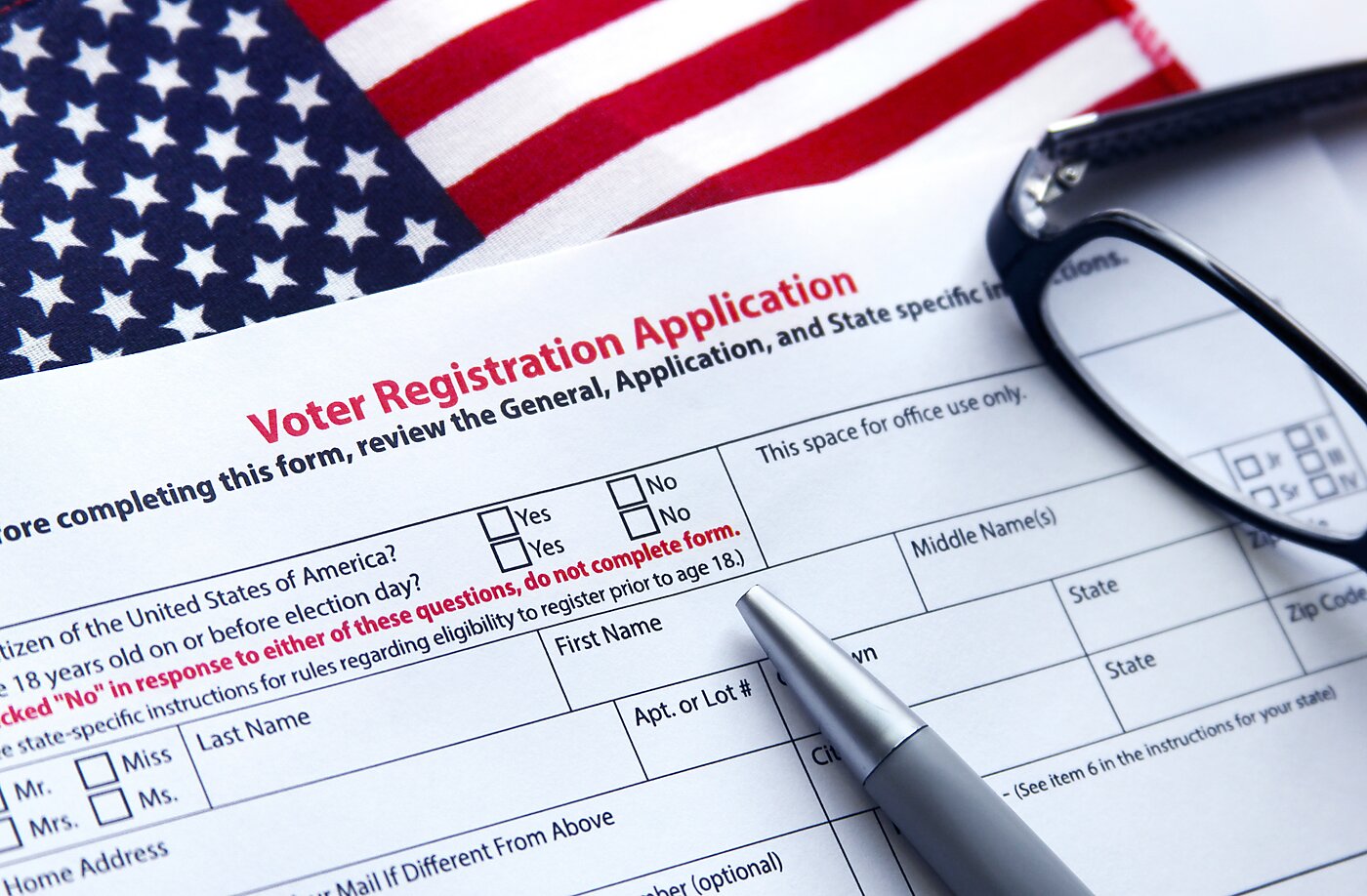
My colleague Stephen Richer has already weighed in with observations on the New Jersey voter registration fiasco, in which a software error mistakenly registered roughly 6,600 persons to vote between June 12, 2023, and June 25, 2024, even though they had affirmed they were not US citizens. Of these, somewhat fewer than 400 later voted.
So far as I am aware, this is by far the biggest instance of unlawful noncitizen voting in the US unearthed in the past generation, so it may matter that it seems to be widely agreed that the mistaken registration did not result from intentional misconduct by the persons added to the rolls, the state, or its software vendor. Damningly, however, when the error was found and the software fixed, the state “never notified affected residents or removed their names from the rolls,” according to the NYT account. Incoming Gov. Mikie Sherrill at a press conference called this “unacceptable.” That’s for sure.
- Details
- Written by: Dr Loren Jay Chassels DO MST FAAIM FAWM
- Category: NJ Libertarian Blog
|
|
|
Dr. Loren Jay Chassels is a Board member of the New Jersey Libertarian Party. Loren earned his doctorate from A.T. Still University of Health Sciences, followed by an internal medicine residency in 2007. Now board-certified in internal medicine, he has practiced as a hospitalist and emergency physician for nearly two decades. See more at lorenjchassels.com |
On July 17, 2026, the United States Court of Appeals for the Third Circuit issued its landmark en banc decision in "Association of New Jersey Rifle and Pistol Clubs I v. Attorney General New Jersey, No. 24-2415,” holding that New Jersey’s prohibitions on many semiautomatic rifles and its ten-round magazine capacity limit violate the Second Amendment.
The court’s ruling represents an important reaffirmation of the Constitution and the principle that government exists to protect rights, not to diminish them.
For years, the citizens of New Jersey have been subjected to some of the nation’s most restrictive firearm laws. Those laws did not target violent criminals, who routinely ignore firearms regulations. Instead, they imposed sweeping restrictions upon peaceful, law-abiding men and women who sought nothing more than to exercise a constitutional right guaranteed by the United States Constitution.
The Third Circuit reached several significant conclusions:
- The court held that semiautomatic rifles commonly owned by law-abiding Americans, including AR-15-style rifles, are protected “arms” under the Second Amendment.
- Applying the framework established by the United States Supreme Court in New York State Rifle & Pistol Association v. Bruen, the court concluded that New Jersey failed to demonstrate a historical tradition of analogous firearm restrictions that would justify its prohibitions.
- Details
- Written by: Dr Loren Jay Chassels DO MST FAAIM FAWM
- Category: NJ Libertarian Blog
|
|
|
Dr. Loren Jay Chassels is a Board member of the New Jersey Libertarian Party. Loren earned his doctorate from A.T. Still University of Health Sciences, followed by an internal medicine residency in 2007. Now board-certified in internal medicine, he has practiced as a hospitalist and emergency physician for nearly two decades. See more at lorenjchassels.com |
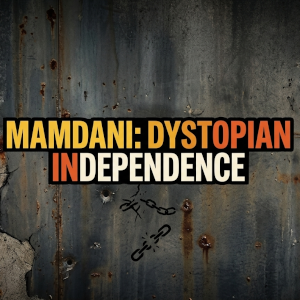
Libertarianism celebrates individual liberty, voluntary cooperation, limited government, property rights, free markets, and the radical idea that people thrive when left free from coercive state power—not when they’re herded into collective dependence. The Declaration of Independence was a thunderous rejection of top-down tyranny in favor of self-governance and unalienable rights. Mamdani’s address, by contrast, reframes July 4th as an occasion for dwelling on systemic flaws, identity-group grievances, and calls for more government intervention—precisely the opposite spirit.
His speech opens with evocative but somber imagery of New York Harbor: tides, explorers, passengers seeing “men waiting at the docks to take them into bondage,” “tenements rife with squalor,” “industry rumbling” amid “steam and smoke,” and a “towering monument to freedom” mixed with hardship. It repeatedly asks “what do we see?” when looking at America and answers with contradictions, hunger amid trillionaires, monopolies, “oligarchs who buy elections,” “masked agents terrorizing our streets,” and historical oppression.
This is not a celebration of independence, resilience, or human achievement under liberty—it’s a somber lecture on perpetual struggle against “power and influence and wealth.” Note the depressing tone: instead of fireworks, innovation, and the pursuit of happiness, it feels like a dirge. Reports and imagery from the event (newly naturalized citizens standing by) suggest the bystanders often wore solemn, almost mournful expressions—more like attendees at a protest or funeral than joyous patriots on the eve of the nation’s 250th birthday. True independence should inspire uplift and pride in what free individuals have built, not guilt and calls for redistribution.
- Details
- Written by: Dr Loren Jay Chassels DO MST FAAIM FAWM
- Category: NJ Libertarian Blog
|
|
|
Dr. Loren Jay Chassels is a Board member of the New Jersey Libertarian Party. Loren earned his doctorate from A.T. Still University of Health Sciences, followed by an internal medicine residency in 2007. Now board-certified in internal medicine, he has practiced as a hospitalist and emergency physician for nearly two decades. See more at lorenjchassels.com |
Communism and socialism, in all their variants, are inherently flawed systems that undermine human flourishing, economic prosperity, and individual liberty. They concentrate power in the hands of the state, stifle innovation and productivity, and have repeatedly produced poverty, authoritarianism, and human suffering wherever implemented at scale. Free-market capitalism, grounded in private property, voluntary exchange, and individual rights, remains the superior framework for human progress. This conviction has profoundly shaped my own life decisions, including my choice to retire early with significantly less savings than I had originally planned.
My Decision for Early Retirement
As someone who has worked diligently and saved consistently for many years, I now see limited incentive to continue full-time employment. A substantial portion of my income is diverted through taxation and allocated to expansive government programs rooted in socialist principles—programs often characterized by inefficiency, waste, and corruption. Rather than directing my earnings toward personal savings, investment, or retirement security, a significant share supports bureaucratic expansion and initiatives that yield suboptimal outcomes. The marginal benefit of additional years of labor does not justify the costs when so much of the reward is redirected and mismanaged. Consequently, I have chosen to retire earlier than originally anticipated, accepting more modest lifetime savings in exchange for greater personal time and autonomy. This decision reflects the disincentives created by such policies and illustrates their broader impact on individual motivation and economic behavior.
The Economic Impossibility of Rational Central Planning
At the core of both communism (collective ownership of the means of production) and socialism (heavy state intervention, redistribution, and control) lies the rejection of private property and market prices. Ludwig von Mises demonstrated in the 1920s that economic calculation under socialism is impossible. Without genuine market prices reflecting supply, demand, and scarcity, central planners lack the information needed to allocate resources efficiently.
- Details
- Written by: Mike Guadagnino
- Category: NJ Libertarian Blog
|
|
|
Dr. Michael Guadagnino holds a Bachelor’s Degree in Biology from the NY Institute of Technology and earned his Doctor of Chiropractic degree from NY Chiropractic College. He served as VP of Public Relations for the New Jersey Libertarian Party from 2017 to 2022. Dr. Guadagnino is the author of the best-selling book Fitness Over 50, 60, 70 and Beyond, available on Amazon and other major platforms. He also shares health and wellness insights on Instagram at @Dr._Guadagnino. Dr. Guadagnino writes on health care topics through the lens of personal freedom and individual liberty. |
The “Make America Healthy Again” (MAHA) movement, often associated with Robert F. Kennedy Jr., has sparked a national conversation about chronic disease, food quality, government regulation, pharmaceutical influence, and personal health responsibility. While supporters and critics often view MAHA through partisan lenses, libertarians tend to evaluate it based on a different set of principles: individual liberty, limited government, free markets, transparency, and personal responsibility.
From a libertarian perspective, MAHA has both appealing strengths and significant concerns.
One of the biggest positives is its focus on individual health and informed decision-making. Libertarians generally believe that people should have the freedom to make their own choices about nutrition, medical care, exercise, and lifestyle. MAHA’s emphasis on educating the public about food ingredients, environmental toxins, and chronic disease aligns with the libertarian belief that individuals should have access to information so they can make decisions without excessive interference from government agencies or corporate interests.
Many libertarians also appreciate MAHA’s skepticism toward the close relationship between government regulators and large industries. Whether discussing pharmaceutical companies, food manufacturers, or agricultural interests, libertarians often worry about “regulatory capture,” where government agencies become overly influenced by the industries they are supposed to regulate. Calls for greater transparency, independent research, and accountability resonate strongly with those who value free and fair markets.
- Details
- Written by: Dr Loren Jay Chassels DO MST FAAIM FAWM
- Category: NJ Libertarian Blog

|
|
|
Dr. Loren Jay Chassels is a Board member of the New Jersey Libertarian Party. Loren earned his doctorate from A.T. Still University of Health Sciences, followed by an internal medicine residency in 2007. Now board-certified in internal medicine, he has practiced as a hospitalist and emergency physician for nearly two decades. See more at lorenjchassels.com |
The federal toilet standard is grounded in the Energy Policy Act of 1992, which required new toilets sold in the United States to use no more than 1.6 gallons per flush beginning in 1994, while EPA’s WaterSense label pushes performance toward 1.28 gallons per flush or less. This paper recommends repealing or substantially revising those federal limits and replacing them with flexible, performance-based state or local standards.[1][2]
Executive Position
The current federal approach is too rigid for a product that depends heavily on plumbing design, waste load, and building conditions. A better policy would preserve conservation goals while allowing higher-flush toilets where needed for sanitation, reliability, and public health.[2][3][1]
Regulatory Background
The national baseline of 1.6 gallons per flush stems from the Energy Policy Act of 1992 and took effect in 1994. EPA’s WaterSense program later promoted toilets that use 1.28 gallons per flush or less, framing them as at least 20 percent more water-efficient than the federal standard. EPA has also continued to revise its WaterSense criteria, showing that the market and performance assumptions around these rules are not fixed.[3][4][5][6][1][2]
- Details
- Written by: James Holcomb
- Category: NJ Libertarian Blog
Originally published on @Citizen Holcomb, republished with permission. See citizenholcomb.com for more information on the author.
One of the most frustrating things about the Libertarian Party is that our best principle is also one of the easiest to abuse.
We believe in free speech. We believe people should be allowed to say unpopular things. We believe the government should not be in the business of policing opinions, punishing dissent, or deciding which views are acceptable. That is not just some cute slogan we put on a campaign flyer. It is a core part of what makes libertarianism different.
But there is a problem we have to be honest about.
- Details
- Written by: Mike Guadagnino
- Category: NJ Libertarian Blog
|
|
|
Dr. Michael Guadagnino holds a Bachelor’s Degree in Biology from the NY Institute of Technology and earned his Doctor of Chiropractic degree from NY Chiropractic College. He served as VP of Public Relations for the New Jersey Libertarian Party from 2017 to 2022. Dr. Guadagnino is the author of the best-selling book Fitness Over 50, 60, 70 and Beyond, available on Amazon and other major platforms. He also shares health and wellness insights on Instagram at @Dr._Guadagnino. Dr. Guadagnino writes on health care topics through the lens of personal freedom and individual liberty. |
The growing divide between patients and their doctors is one of the most overlooked consequences of modern health policy. For generations the relationship between a physician and a patient was simple and direct.
A person sought care, the doctor used their training and experience to recommend a course of action, and the patient made a decision based on trust and personal preference. Today that once straightforward relationship is buried beneath a mountain of regulations, mandates, billing codes, and bureaucratic oversight created by state and federal agencies.
Instead of a conversation between doctor and patient, health care has increasingly become a negotiation with bureaucracies. Government agencies, insurance administrators, and politically influenced health boards now shape what treatments are approved, reimbursed, or even allowed.
Doctors often know what may help their patients, but they must first ask permission from systems that were designed by regulators rather than medical professionals.
- Details
- Written by: William F Sihr
- Category: NJ Libertarian Blog
The New Jersey Libertarian Party opposes the unconstitutional military operations in Iran that started as a part of the joint operations by the US and the Israeli governments that began on February 28.
The Article I, Section VIII of the United States Constitution includes the powers reserved for Congress, which includes the power to declare war. The Congress of the United States did not declare war, while the President is not authorized to wage one without congressional authorization, with both the Executive and the Legislative branches failing in their responsibilities to protect and defend the Constitution of the United States.
- Details
- Written by: Jay Edgar
- Category: NJ Libertarian Blog
 Nothing should arouse the ire of a libertarian more than having federal agents detaining people on the streets without probable cause. ICE agents have been canvassing the streets of New Jersey performing warrantless raids on homes and businesses. The have been sweeping up citizens, documented immigrants, and undocumented immigrants. We are witnessing the transformation of our communities into zones where "show me your papers" is no longer a dystopian trope, but a daily requirement.
Within the past week alone, the tactics used by federal agents have mirrored those of authoritarian regimes.
- In Morristown ICE kidnapped an honor High School student who has never missed an immigration appointment and had an upcoming appointment with immigration authorities.
- Also in Morristown, a father stepped outside to collect a food delivery and was snatched up – leaving his six year old daughter alone.
- In Warren Township, ICE was seen pulling people out of cars and taking them away.
- Unknown masked agents grabbed a woman and others and took them away in Red Bank.
- Details
- Written by: Mike Guadagnino
- Category: NJ Libertarian Blog
|
|
|
Dr. Michael Guadagnino holds a Bachelor’s Degree in Biology from the NY Institute of Technology and earned his Doctor of Chiropractic degree from NY Chiropractic College. He served as VP of Public Relations for the New Jersey Libertarian Party from 2017 to 2022. Dr. Guadagnino is the author of the best-selling book Fitness Over 50, 60, 70 and Beyond, available on Amazon and other major platforms. He also shares health and wellness insights on Instagram at @Dr._Guadagnino. As a regular guest contributor, Dr. Guadagnino writes on health care topics through the lens of personal freedom and individual liberty. |
By 2026 one truth should be impossible to ignore no institution is coming to save your health. Not the government, not Big Pharma, not the latest app wearable or headline grabbing guideline. Health has always been and will remain a profoundly personal responsibility. A libertarian view of wellness does not reject science or community; it rejects the illusion that freedom can be outsourced.
Being healthy in 2026 means reclaiming ownership of your body in a world that profits from your dependency.
The modern health system is excellent at crisis management and terrible at cultivating resilience. It treats symptoms well but incentives rarely reward prevention strength or long-term vitality. If you want to thrive not merely survive you must opt out of passive consumption and opt into active participation. That starts with movement. Humans were designed to move daily not occasionally. Strength training walking sprinting mobility work these are not fitness trends they are biological necessities. You do not need permission to lift weights take the stairs or challenge your comfort zone. You need discipline.
Nutrition in 2026 should be guided less by food pyramids and more by personal experimentation. Centralized dietary dogma has failed repeatedly because people are not averages. Real health comes from eating whole unprocessed foods prioritizing protein healthy fats and vegetables and paying attention to how your body responds. Read labels. Question marketing. If a product needs a government subsidy or a cartoon mascot to survive it probably does not belong in your body. Food is information not entertainment.
- Details
- Written by: Mike Guadagnino
- Category: NJ Libertarian Blog
|
|
|
Dr. Michael Guadagnino holds a Bachelor’s Degree in Biology from the New York Institute of Technology and earned his Doctor of Chiropractic degree from New York Chiropractic College. He served as Vice President of Public Relations for the New Jersey Libertarian Party from 2017 to 2022. Dr. Guadagnino is the author of the best-selling book Fitness Over 50, 60, 70 and Beyond, available on Amazon and other major platforms. He also shares health and wellness insights on Instagram at @Dr._Guadagnino. As a regular guest contributor, Dr. Guadagnino writes on health care topics through the lens of personal freedom and individual liberty. |
In the United States, most medical research is influenced, directed, and funded by two powerful forces: the federal government and the pharmaceutical industry. Together, they shape not only what gets studied, but what ultimately reaches patients. The National Institutes of Health (NIH) is the largest public funder of biomedical research in the country, while major pharmaceutical companies provide enormous private funding for drug development and clinical trials. This relationship has created a system where public institutions and private corporations effectively control the direction of modern medicine.
The NIH primarily funds early stage research. Scientists apply for grants to study disease mechanisms, identify targets for treatment, and test initial concepts. This work is carried out in universities, teaching hospitals, and research institutes across the country. Because the NIH controls such a large portion of grant funding, it also influences what research topics are prioritized. Areas that align with mainstream models of disease and treatment, especially drug based solutions, are more likely to receive consistent funding than alternative or non pharmaceutical approaches.
Pharmaceutical companies step in once a discovery shows commercial potential. They fund later stage studies, large scale clinical trials, and regulatory approval processes. These stages are tremendously expensive and are rarely paid for by government grants alone. This means that if a potential therapy does not fit a profitable business model, it is far less likely to advance, even if it shows promise. As a result, the majority of treatments that reach the market are designed around patentable drugs rather than low-cost lifestyle, nutritional, or mechanical interventions.
- Details
- Written by: David J. Bier
- Category: NJ Libertarian Blog
|
|
|
David J. Bier is the Director of Immigration Studies and occupies The Selz Foundation Chair in Immigration Policy. He is an expert on legal immigration, border security, and interior enforcement. |

Originally published on Cato.org, republished under Creative Commons agreement.
On December 4, the Department of Justice (DOJ) disseminated a memorandum to all federal prosecutors creating a strategy for arresting and charging individuals supposedly aligned with “Antifa.” The memo requires DOJ to investigate and identify the “most serious, most readily provable” crimes committed by potential targets, including those with “extreme views in favor of mass migration and open borders.”
Specifically, the document defines domestic terrorism broadly to include “doxing” and “impeding” immigration and other law enforcement. Doxing is not specifically defined, but the memo references calls to require Immigration and Customs Enforcement (ICE) agents to give their names and operate unmasked. Individuals who donate to organizations that “impede” or “dox” will be investigated and deemed to have supported “domestic terrorism.”
Therefore, it is crucial to understand that ICE and the Department of Homeland Security (DHS) consider people who follow DHS and ICE agents to observe, record, or protest their operations as engaging in “impeding.” DHS has a systematic policy of threatening people who follow ICE or DHS agents to record their activities with detentions, arrests, and violence, and agents have already chased, detained, arrested, charged, struck, and shot at people who follow them.
The purpose of this post is to establish that these incidents are not isolated overreach by individual agents, but rather, an official, nationwide policy of intimidating and threatening people who attempt to observe and record DHS operations. This matters legally because courts are more likely to enjoin an official policy rather than impose some new requirements to stop sporadic, uncoordinated actions by individual agents.
The Right to Follow, Record, Report, and Protest